How to Read an Irish Traditional Music Session Before Joining In
Irish traditional music session etiquette helps you read a room, choose the right moment to ask, and join a tune without unsettling the players.
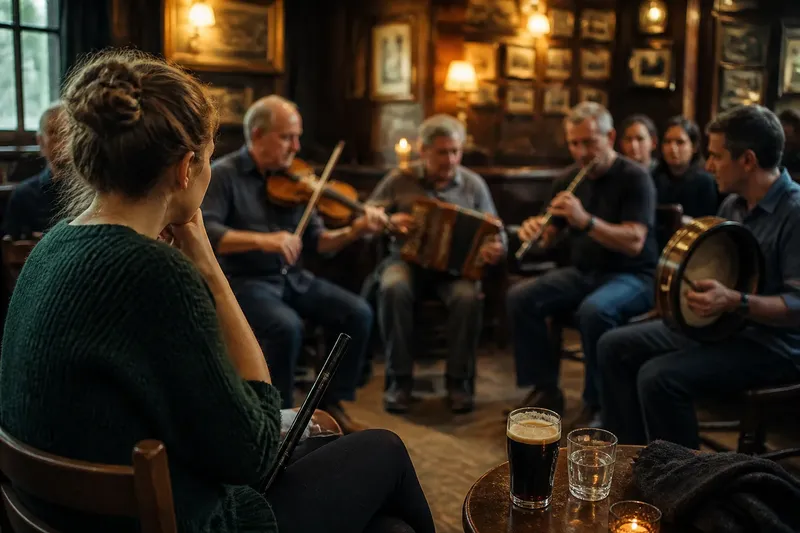
The common mistake at an Irish traditional music session is to hear a familiar tune and begin playing; the cost is that you may cut across a set already being shaped by the musicians. Irish traditional music session etiquette begins with noticing how this particular group plays, because an informal gathering is not automatically an open jam or a lesson.
Some sessions welcome visitors to listen, while others invite players only by arrangement or at particular moments. The room itself offers clues: watch who starts tunes, how players signal a change, and whether conversation happens between sets. Those details matter more than assumptions about what a session ought to be.
Finding the right session
Check the venue or organiser’s current description before going. If it does not say whether newcomers may listen or play, ask directly: “Would it be all right to come and listen, and do you welcome visiting players?” A clear answer helps you choose an evening that suits your purpose.
Bring an instrument only if you are prepared to keep it put away until invited or given an obvious opening. A fiddle, tin whistle, flute, concertina or bodhrán may fit the music, but the instrument alone does not tell you which tunes the group knows or how it shares turns.
On arrival, find a seat without squeezing into the musicians’ circle or blocking a walkway. Keep conversation quiet once the tunes begin, and silence your phone. If the room is crowded, listening from a respectful distance is better than trying to claim space beside the players.
Reading the music
Notice who begins each tune and how the others respond. The player who starts often sets the pace and may choose what follows; a nod, a spoken tune name or a short pause can mark a transition. A loose circle helps musicians hear and see one another, but it does not mean every person there should take a turn.
Listen through a complete set before deciding that you know what is happening. Players may repeat a melody or move directly into another, and a newcomer who starts a different tune can pull the group in competing directions. If you are uncertain whether a pause is an invitation, wait for someone else to begin.
Volume and rhythm also affect the group. A loud instrument can overwhelm a small room, while percussion can change the feel of a tune. If invited to join, keep your playing measured, follow the established pulse and leave room for the melody.
Asking to join
Wait for the set to finish before asking whether visiting players are welcome. If the answer is yes, ask how the group prefers newcomers to join; it may be easier to enter on a tune you know well than to start one yourself. An invitation to play does not necessarily mean you should lead the next change.
Choose a melody you can keep steadily from memory. If you know only part of it, sit that tune out rather than joining halfway through and hoping to catch up. If you lose your place after starting, stop playing and listen until the next tune offers a clear opening.
Say you arrive with a tin whistle and recognise a reel, but do not know whether the group welcomes visitors. You listen through the set, then ask during the pause; the players say they are happy for you to join a later tune. You wait for one you know securely and play softly, so the group can continue at its own pace while you take part.
Questions about joining?
Can I come just to listen?
Many sessions have listeners, but room and group preferences differ. Check with the venue or organiser, then choose a seat that does not crowd the musicians.
Should I bring sheet music?
For an initial visit, listening is often more useful because players may move between tunes without stopping. If the group uses written music, you can ask about its practice during a quiet pause.
When should I ask a question?
Wait until a tune or set has ended, then ask briefly and quietly. Questions about joining or identifying a tune are easier to answer between sets than over the music.
May I record the session?
Ask the players and anyone who may be captured before recording; a venue’s permission alone may not cover everyone’s wishes. If anyone is uncomfortable or you cannot ask, keep the phone away and listen instead.
Keeping good manners
Follow the venue’s rules about refreshments, chairs and clear walkways. Do not ask the group to stop so you can teach a tune unless someone has invited that exchange; a workshop or lesson is a better setting for instruction.
It is not worth memorising a long list of tune names before your first visit. A little familiarity can help, but careful attention to the players’ cues will tell you more about this room than arriving with a catalogue of melodies.
Afterwards, make a brief note of the instruments you heard, how changes were signalled and whether visitors were invited to play. If you plan to return, practise a few tunes you heard until you can keep their rhythm steadily; Irish traditional music session etiquette is learned most usefully by matching your choices to the group in front of you.